
Tom Clancy's Rainbow Six Tactics HQ, Training, and Downtime
The campaign is won between deployments, not only in the Breach.
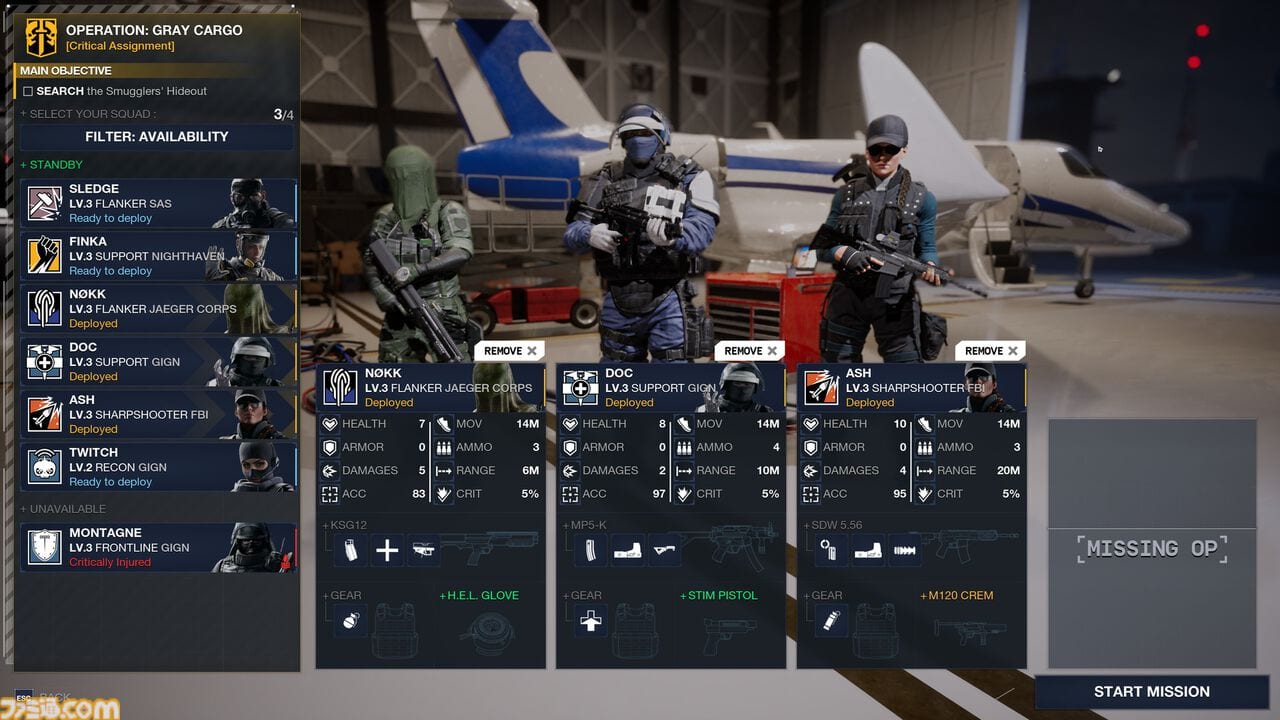
Rainbow Six Tactics is built as a campaign, not a skirmish playlist. After each operation you return to Rainbow HQ as Six. That layer is easy to skip in trailers because explosions edit better than a briefing table. It is also where the game becomes Rainbow Six instead of a string of puzzle maps.
Ubisoft Paris and Xbox Wire describe HQ as the place you review intel, train operators, recover from injuries, and open departments that unlock gear and support. IGN’s briefing added skill trees per operator and a story with about ninety minutes of cinematics. Put together, HQ is your strategic layer. The field is your tactical layer. How to play is the field. This page is the building.
What HQ is for
Choose the next fire. The reveal implies a world map of threats rather than a single railroad. You will not be able to be everywhere. That is the XCOM-shaped decision: which city burns while you hit the prison in Denmark or the platform offshore. Mission types should inform the pick as much as the story beat does.
Turn intel into a squad. Drones inside a mission are tactical intel. HQ intel is strategic: who is funding the cells, which operator kits will matter, whether the next map is a hostage problem. Feed that into squad building before you admire a favorite operator.
Train and specialize. Each of the 15 operators has a distinct skill tree. That means two players can both “main” Ash and still diverge. Spend training on the jobs you actually deploy: entry, intel, space, closer. Training an operator you never take is how campaigns quietly fail.
Pay the injury bill. Operators who survive a messy Breach may still sit. With optional permadeath on, HQ is where empty chairs stay empty for the rest of that campaign. Either way, your squad planner needs bench depth, not a single sacred four. Arrested hostiles also feed this layer — see arrests and intel.
Unlock support. “Departments” are the word Ubisoft used for HQ upgrades that yield gear and capabilities. Until a skill board is public, think of them as the research layer. Do not dump every resource into damage if hostage missions need drones, breach toys, and medical support.
A between-mission checklist
- Debrief: who is hurt, who is out of utility, who got the cinematic moment and who actually did the work.
- Story: watch the intel. The campaign is the first new Rainbow Six single-player story since Vegas 2, and it is written with Siege’s lore team. Paul Bishop is the spine.
- Roster: fill the four jobs for the next map type, not the last one.
- Training: one targeted upgrade beats a scatter of +1s.
- World map: pick the operation whose failure would hurt the campaign most, not the one with the prettiest thumbnail.
How HQ changes the Breach
Players coming from Siege think in rounds. HQ thinks in weeks. A noisy Breach that wins a room and hospitalizes two operators is a strategic loss if the next map is a bomb with no medic. Play field missions with the next HQ screen in mind. That is the adult version of “don’t greed the plant.”
The Closed Test, when it opens, should be used to measure this loop. If HQ is thin, Tactics is a mission pack. If HQ is thick, Tactics is a campaign. The Closed Test page is where we will record which of those two games you actually got.
What is still unknown
Ubisoft has not published:
- How many HQ departments exist.
- Whether training is shared XP or per-operator.
- Whether you can recover a dead operator through story, or only through the remaining roster.
- How strictly the world map times out if you ignore a region.
Those are the questions to ask in every future dev blog. Until then, run HQ like a small special-forces program: few people, expensive to replace, always one operation behind the conspiracy. Getting started is the onboarding; this page is the career.
When new HQ screenshots land, they will go in Updates and this guide will gain a department table. Bookmark both rather than trusting a leaked skill spreadsheet.
Frequently Asked Questions
Quick answers to the most common questions.
Can I skip HQ and only play missions?
The campaign is designed around HQ prep and field execution. Even if a skip exists, you would miss training, intel, and injury management.
Do operators level up?
Yes. Coverage describes per-operator skill trees and training between missions. Exact XP rules are not public.
What happens if an operator is injured?
HQ is described as the recovery layer. Injured operators may be unavailable for the next deployment. Pack bench depth in the roster.
Is HQ like XCOM's avenger?
Spiritually: a home base with training, intel, and upgrades. It is still Rainbow's command center, not an alien war room.